
Matti Leshem explains how after a career focused on Jewish history, he created a series about eight Catholic saints, while Israeli actress Dar Zuzovsky recalls playing Mary Magdalene at a time of ‘hyper-tension’ – and being on the set with Scorsese. Original Article Here+
Dec 17, 2024
NEW YORK – In October 1988, an incendiary device planted by a Catholic group exploded in a Parisian cinema during a screening of Martin Scorsese’s “The Last Temptation of Christ,” injuring 13 people.
The movie had been widely condemned by the church and many of its followers, despite opening with this statement: “This film is not based on the Gospels, but upon the fictional exploration of the eternal spiritual conflict.”
Much like incidents surrounding the depiction of religion in art – from Salman Rushdie’s “The Satanic Verses” to “Monty Python’s Life of Brian” – the controversy underscores how volatile and sensitive the intersection of art and faith can prove.
Decades on from his “Temptation” controversy, Scorsese’s latest project on Christianity adopts a markedly different approach. “Martin Scorsese Presents: The Saints” is an eight-part docudrama now airing on Fox Nation in America. It explores the lives of historical saints through dramatized reenactments, scholarly discussions and a narration by the Oscar-winning director himself.

Willem Dafoe as Jesus in Martin Scorsese’s “The Last Temptation of Christ.”Credit: IMDb.com, Inc.
The series is being released in two parts, with the first four episodes already available to stream in the United States. They include well-known saints like Joan of Arc and John the Baptist, as well as lesser-known modern saints such as Maximilian Kolbe – the Polish priest who sheltered refugees during World War II and sacrificed his life at Auschwitz to save another.
The second part, arriving next year, will include figures such as Francis of Assisi and Mary Magdalene.
Despite Scorsese’s top billing, the real driving force behind the show is not the most obvious person for something steeped in Christian history and theology: Israeli-American producer Matti Leshem.
Leshem’s previous productions include “The Survivor,” his Emmy-nominated HBO film about Auschwitz prisoner Harry Haft, forced to box against fellow inmates in order to stay alive; and “The Shallows,” in which surfer Blake Lively does battle with a great white shark.
He was also an executive producer on “The Commandant’s Shadow,” a 2024 documentary that tells the story of Auschwitz commandant Rudolf Höss and his family.
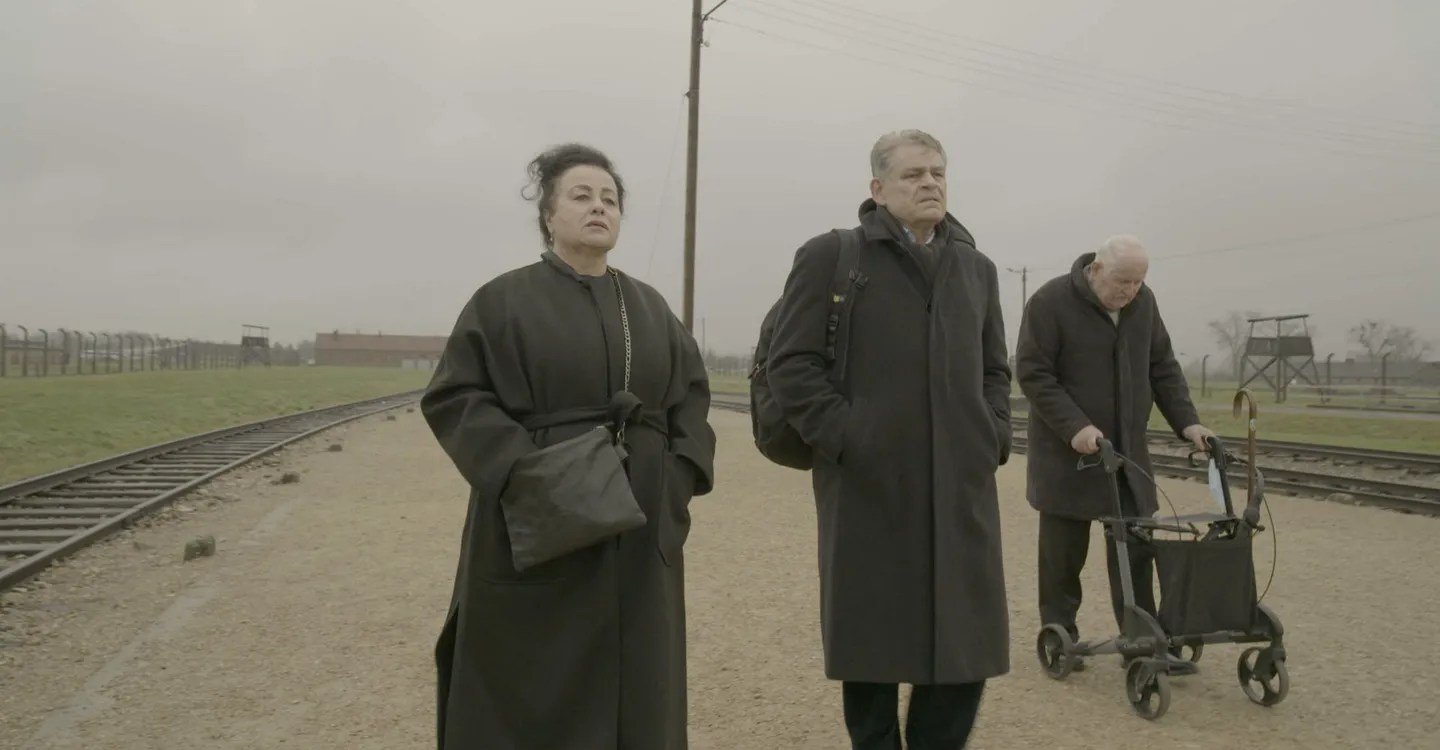
A scene from the documentary “The Commandant’s Shadow,” where some of its protagonists visit the Auschwitz concentration camp.Credit: Warner Bros. Pictures / Tulip En
So how did a Jewish producer who has spent much of his career focused on Jewish history and storytelling end up creating a series about Catholic saints?
Speaking from his Los Angeles home, Leshem explains that his father, Moshe Leshem, was an Israeli diplomat who served in countries as diverse as the Democratic Republic of the Congo (then known as Zaire) and Denmark. “This means we moved a lot.” Leshem Sr. was also a Holocaust survivor and a devout atheist.
“It’s not about proselytizing, but sparking a conversation about what ideals are worth fighting and dying for.“
Matti Leshem
During that stint in Denmark, Matti was sent to a private Catholic school in Copenhagen. He says he went there because he wanted to be with his friends.
And it was there that he was exposed to the stories of the saints. “To me, these were very human stories,” he recalls. “They never intended to be saints – these were regular people living in extraordinary circumstances who decided to put others before themselves.”
The stories of the saints had stayed with him throughout his life. “These individuals chose to die for their beliefs – a concept reminiscent of the Jewish principle of kiddush hashem.”
‘A true masterclass’
Leshem first shared the idea for the project with his wife Lynn Harris a decade ago, after they had started their own production company, Weimaraner Republic Pictures. “I told her I wanted Scorsese to make it,” he says. She also worked as an executive vice president for production at Warner Bros. for more than a decade and, as Leshem jokes, “she left the company but not our marriage.”

“John in the Wilderness” by Caravaggio. John the Baptist is one of eight saints featured in the docudrama.Credit: Masur/Wikimedia
In 2017, then, he received a surprise call from a colleague: “Martin Scorsese is at the Hotel Bel-Air right now. If you can get here, you’ll have 30 minutes to pitch your idea,” Leshem recounts.
He rushed to the hotel to talk with the movie legend. “We had a deep, educated conversation about the saints and religion – Scorsese is immensely knowledgeable,” he says. Despite his assistants urging him to move on, Scorsese waved them away. After two and a half hours, his assistant reminded him of his schedule. The director turned to Leshem and said simply, “Let’s do it.”
The producer says Scorsese was engaged at every step. “He was deeply invested in the script [written by Kent Jones]. He called while we were on set, staying in contact throughout the process. When it was time to edit, we were planning on editing in Los Angeles but he insisted on it being in
New York [where he lives and works]. We sat for weeks in the editing suite. It was a true masterclass – one of most significant experience of filmmaking I had.”

The episode of “Martin Scorsese Presents: The Saints” focusing on Maximilian Kolbe.Credit: Slobodan Pikula/Fox Nation
Each episode unfolds in two parts. The first is a dramatized depiction of the saint’s life with narration by Scorsese. The second transitions to a brief panel discussion led by Scorsese, where religious scholars unpack the moral and theological complexities of a saint’s actions.
The structure creates an engaging combination of cinematic dramatization and intellectual dialogue, making “Saints” both a historical primer and a reflection on spiritual devotion.
While the dramatizations capture the saints’ lives, the discussions raise questions about their inherent contradictions. These include Joan of Arc’s role in military carnage and Kolbe’s antisemitic texts.
In one conversation between Scorsese and a religious scholar, the subject of martyrdom is explored. It isn’t about dying but staying with people, or bearing witness, they say. These saints didn’t choose death; it was a consequence of their solidarity with the victims.
Unlike that of his atheist father, Leshem’s life is profoundly rooted in Judaism. He says working with a devout Catholic such as Scorsese was easy because the series wasn’t based on dogma. The producer sees the project instead as being rooted in a humanist perspective. “It’s not about proselytizing,” he says, “but sparking a conversation about what ideals are worth fighting and dying for.”
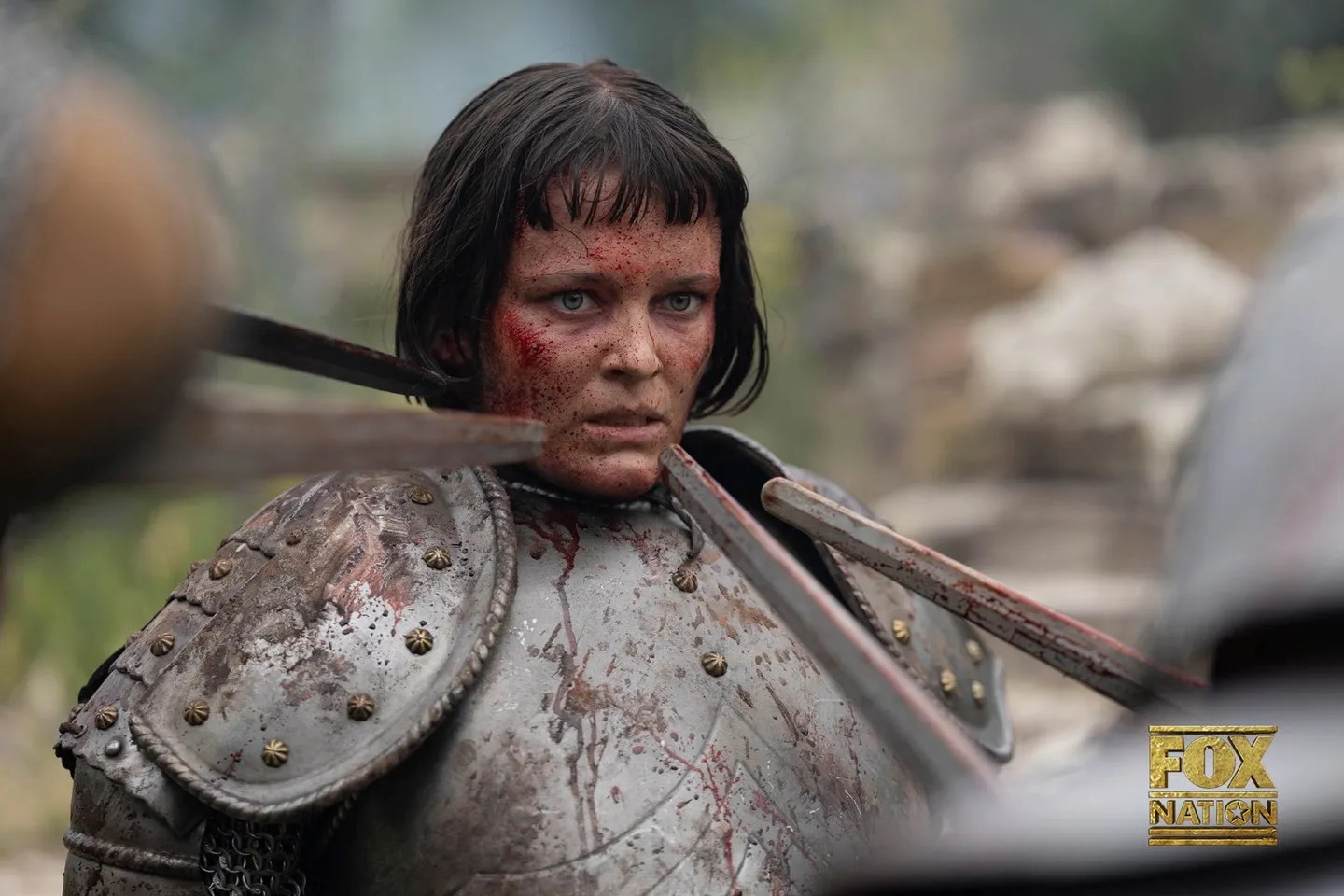
Liah O’Prey as Joan of Arc in a scene from the docudrama “Martin Scorsese Presents: The Saints.”Credit: Slobodan Pikula/Fox Nation
Far greater than religion
The cast includes several Israeli or Jewish actors, including Ariel Yagen as Jesus, Adi Zemach as Salome and Amitai Keidar as Herod. For Mary Magdalene, Leshem had only one choice: Dar Zuzovsky. “I’ve followed Dar’s career for a long time,” he says. “We cast her for a role in Barry Levinson’s ‘The Survivor.’ When this series came together, I knew she was Mary.”
Zuzovsky recalls receiving the casting call while staying in a Paris apartment. “Matti asks me to send in an audition tape, but I don’t have a coach or a studio. I improvise, filming it with a makeshift setup.”

Martin Scorsese, left, and Matti Leshem. The driving forces behind “Martin Scorsese Presents: The Saints.”Credit: Tommy Garcia
Leshem later showed the tape to Scorsese, who watched it briefly before giving the thumbs-up.
As she began researching the role, Zuzovsky says she felt a sense of trepidation over something that felt so alien to her. “I don’t know anything about the New Testament or Jesus,” she says. “Growing up in Israel, we are never taught about Christianity in school. Also, she means so much to people around the world that it was daunting to think I could portray her.”
But the more she read about Mary, Zuzovsky says, the better she could understand the complexity of portraying such a transformative figure.
“In patriarchal theocratic traditions, she is often depicted as a sinner, a prostitute – a portrayal I believe stems from the church’s fear of powerful women. But she is so much more complex: a healer, someone who, according to the Gnostic Gospel of Mary, channels visions and the first witness to Jesus’ resurrection. They may have had intimate relations, which challenges the idea of infallible Jesus.”

“The Penitent Magdalene” by Titian.Credit: National Museum of Capodimonte/Wikimedia Commons
Zuzovsky reflects on how, despite Mary Magdalene’s central role in Christianity, she herself was Jewish – something that for the actress transcends religious divides and represents something profoundly universal. “Through her story as a woman, I’ve come to see that the concept of salvation can be understood as something far greater than religion,” she says.
But playing Mary Magdalene wasn’t the only remarkable aspect of her involvement in the project.
After her work on the series had finished, Leshem called her with unexpected news. The producers wanted her to play another role: Saint Clare of Assisi. The shoot was in Polizzi Generosa – Scorsese’s ancestral hometown in Sicily – and the Italian-American director himself would be present on set.
“It’s a small town of 2,000 people,” Zuzovsky recalls. “While we were there, they held a ceremony where Scorsese was presented with the key to the city. The entire experience – from being in that historic town to working on set with him and playing Saint Clare, whose journey mirrors Mary Magdalene in many ways – was so intimate, so profound. It’s one of the most special experiences I’ve ever had.”

Martin Scorsese, left, with Mary Karr, Fr. James Martin, Paul Elie and Fr, Edward Beck taking part in a panel discussion for “Martin Scorsese Presents: The Saints,” in New York last month.Credit: CJ Rivera/AP
Building bridges
Leshem’s series debuts against the backdrop of the war in Gaza, with Hollywood arguably more riven than it has ever been. There have been open letters accusing the industry of marginalizing Jewish voices, while counterprotests have called for stronger denunciations of Israel. At the same time, social media conversations about casting and representation, often wildly inaccurate, have added to the tensions.
The recent Netflix film “Mary,” for instance, has faced criticism for casting Israeli actress Noa Cohen as Jesus’ mother, drawing criticism over the lack of Arab representation, insensitivity amid Middle Eastern tensions and debates about Mary’s identity. Similar controversy surrounds the upcoming “Cleopatra” movie starring Israeli actress Gal Gadot as the Queen of the Nile.
Leshem finds the controversy baffling. “Art and filmmaking are about broadening perspectives and fostering dialogue,” he says. “Mary was from the region – casting accordingly feels entirely natural.”
He acknowledges that the atmosphere following October 7, 2023 has been challenging, but stresses the success of projects led by Jews and Israelis, like his recent documentary “The Commandant’s Shadow.”
In recent years, people have viewed the region primarily through a deeply political lens. This project highlights its deeper histories and meanings, far beyond its current political implications.
Dar Zuzovsky
“I am extremely proud to be Jewish Israeli, and it meant so much to collaborate with people from my culture,” he says. “‘Saints’ was one of the greatest experiences of my career. Working with Israeli actors and directing in Hebrew brought a deep cultural connection and has been profound.”
Zuzovsky, meanwhile, believes that “Saints” has the potential to offer a fresh perspective on both the Middle East and Israel. “In recent years, people have viewed the region primarily through a deeply political lens. This project highlights its deeper histories and meanings, far beyond its current political implications,” she says.
“It’s about bridging the gap between cultures and people, especially in this hyper-polarized time where division and tribalism often define what is considered ‘my culture’ versus others’.”
For Leshem, like many of his previous works, the show explores the essence of humanity when dealing with the most challenging of circumstances. “The heart of the project is this: What do we truly believe in, especially in times like these – and what sacrifices are we willing to make for those beliefs?”
***

 Matti Leshem